
Gen Z: The Most Connected, Yet the Most Uncertain

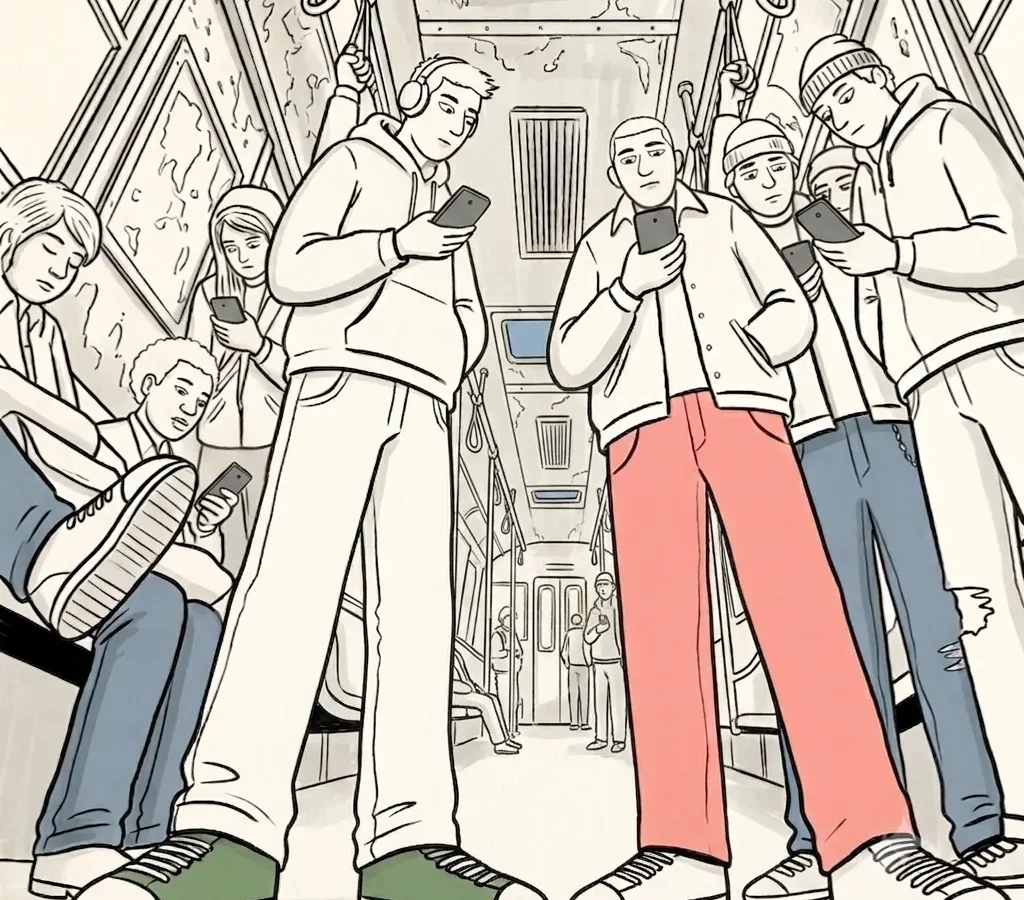
There’s a room. One person inside it. A screen glowing in the dark. Five thousand strangers are laughing at something they said, liking it, sharing it, occasionally screaming at it. The phone in their hand can reach anyone on the planet within seconds. And still, the door is locked from the inside. Still, somehow, completely alone. Sounds like the setup for a psychological thriller, right? It is, more or less, the daily reality of today’s Generation.
Born between 1997 and 2012, this generation carries a name that ends at the last letter of the alphabet, as if whoever was keeping count simply ran out of road. Some people call them the Zoomers. They make up roughly 25 percent of the world’s population right now. They didn’t discover the internet the way their parents did, squinting at a dial-up modem in wonder. For them, it was just always there. Like electricity. Like gravity. The smartphone wasn’t a gadget: it was a third hand. But what that hand has been building, and what it has quietly been breaking, are two very different stories.
Born on a Stormy Night
You can’t make sense of this generation without backing up a little. The Millennials who came just before them grew up drunk on optimism. The Berlin Wall had fallen. Francis Fukuyama was declaring the end of history, no less. The internet was new and shiny and full of promise. Then 2008 happened, and threw a bucket of freezing water straight into the face of all that hope.
Gen-Z inherited the aftermath. They came of age on that wreckage. By the time they were teenagers, climate anxiety was already humming in the background like a bad signal that never fully cuts out. And then COVID-19 showed up and ate their adolescence whole. First year of college, gone. New friendships, first taste of independence, all of it, swallowed. So when you notice this generation seems perpetually anxious, that’s not a character flaw. That’s a weather report.
A 2025 report from the Global Coalition for Youth Mental Health, led by UNICEF, drawing on responses from Gen-Zers aged 14 to 25, found that six in ten feel overwhelmed by the world around them. Four in ten say they need mental health support just to function on a given day. Deloitte’s global survey of more than 23,000 people across 44 countries found that 40 percent of Gen-Z experience near-constant anxiety or serious mental stress. That’s the average. In the United States, a 2025 Harmony Healthcare IT survey found that 46 percent of American Gen-Zers have already received a formal mental health diagnosis. Fifty-three percent say their sleep is disrupted. Forty-nine percent struggle to concentrate. Forty-five percent actively avoid social gatherings.
Sit with that last number. The generation that avoids social gatherings is also the one posting thousands of Instagram Stories every single day. The contradiction doesn’t resolve. It just sits there, staring back at you.
A Million Friends, and Still Alone
No generation in human history has had more tools for connection. More platforms, more ways to reach out, more hours of the day in which touching base with someone — anyone — is technically possible. The loneliness data, then, should not exist. And yet.
GWI’s 2024 figures show that 80 percent of Gen-Z experienced loneliness within the past year. Among Baby Boomers, that number is 45 percent. Cigna Group research puts 67 percent of American Gen-Zers in the “lonely” category, the highest rate recorded for any living generation. Millennials trail just behind at 65 percent, which is its own kind of damning, but the gap is real.
The mechanism underneath all this isn’t mysterious, exactly. People who spend more time on social media tend to feel lonelier. The place they go looking for warmth sends them home emptier than before. What makes it stranger is that 54 percent of Gen-Z will tell you, clearly and without hesitation, that in-person relationships are far more valuable than digital ones. They know. They just can’t seem to find the road back.
Romance tells a similar story. According to Pew Research Center, around 56 percent of Gen-Zers between 18 and 29 are currently single, the highest rate ever recorded for that age group in American history. Dating apps, for many, leave them more disillusioned than when they started. But don’t read cynicism into that. A 2025 Match Group survey found that 80 percent of single Gen-Zers genuinely believe they will find lasting love. The hopelessness isn’t philosophical. It’s situational. They want love. The architecture modern romance has built just keeps getting in the way.
The Script They Stopped Reciting
“What do you want to be when you grow up?” Every child gets this question approximately a thousand times before they’re old enough to have a real answer. The expected responses are pre-loaded: doctor, engineer, something stable, something respectable. Gen-Z has quietly stopped answering from that list.
Deloitte’s 2025 global survey found that only 6 percent of Gen-Z say their primary career goal is to reach a top leadership position. Six. The rest want learning opportunities, actual work-life balance, and work that means something beyond a salary and a title. The 2026 survey confirms it, only 25 percent want to fast-track through promotions. Most would rather grow slowly, absorb real experience, and build something that lasts. The corporate ladder doesn’t interest them. What they want is for work, identity, and purpose to occupy the same life without one consuming the others entirely.
In 2022, “Quiet Quitting” (doing exactly what the job requires and nothing beyond it) trend became a global conversation, with Gen-Z largely at the center. Business managers lined up to call them the most difficult generation they’d ever managed. (Worth noting: Millennials were called lazy and unambitious once too. Every generation rewrites the definition of work. The ones doing the sneering are always somehow surprised when it happens again.)
A Different Kind of Fear
Previous generations grew up asking: what will I become? Gen-Z is asking something larger and colder: will the world even be here?
Pew Research Center found that 69 percent of Gen-Z social media users feel anxious when they encounter climate content online. That’s not a fringe concern. That’s the majority of a generation carrying a low-grade dread in the background of everything they do. GlobeScan data shows that between 2020 and 2024, Gen-Z’s interest in taking personal environmental action dropped from 76 to 68 percent, while those who feel indifferent about individual action rose from 33 to 42 percent. This is what eco-anxiety becomes when it has nowhere to go: eco-fatigue. They understand the problem better than almost anyone. The solution just feels so enormous, so stitched into systems far beyond their reach, that disengagement starts to look like the only sane response. Gen-Z sees the world as a frightening place, and a growing number of them have stopped believing they have the power to change it.
And then, on top of that, there’s AI. Will the machines take their jobs, or hand them something better? A 2025 survey found that 61 percent of Gen-Z and Millennials believe AI’s automation of entry-level roles will make it significantly harder for young people to break in at all. The technology that was supposed to liberate them may end up occupying the first desk they were ever going to sit at. Hard to think of a neater paradox than that.
And yet, Deloitte’s 2026 survey found that 74 percent of Gen-Z are already using AI at work, and most believe it will save them time and open doors that didn’t previously exist. The anxiety and the optimism are both present, unresolved, living side by side. Which is, honestly, the most Gen-Z thing about the whole situation.
The Revolution That Changed Everything, and the Morning After
Once you have the global picture, you have to talk about Bangladesh. In 2024, Gen-Z here changed history. What began as a quota reform movement became something the world hadn’t quite seen before, an uprising engineered not by parties or institutions, but by a generation armed with smartphones and an absolute refusal to accept things as they were. Internationally recognized as the world’s first Gen-Z revolution. Nobel laureate Muhammad Yunus called this generation the hope for building a world of zero unemployment, zero poverty, zero carbon emissions. High praise. Heavy expectations.
But the morning after a revolution is always harder than the night before.
Bangladesh Bureau of Statistics Labour Force Survey data from 2024 puts the unemployment rate among graduate-degree holders at 13.5 percent: nearly four times the national average. For young women graduates, it’s 16.8 percent. CPD data tells us that roughly 900,000 graduates: one in every three unemployed people in the country, hold degrees the market has simply decided it doesn’t need.
The Business Standard captured this in the story of Saim, a freelance graphic designer from Dhaka. “The world calls us a freelancing powerhouse,” he said. “But nobody sees the 3 AM shifts, the terror of waking up to find an algorithm change has wiped out your income overnight. I earn in dollars but I live in a bubble. Five thousand friends online, and I haven’t spoken to my neighbor in a week.”
The Language They Built to Stay Alive
Here’s what genuinely sets this generation apart: they are self-aware in a way no previous generation has been, or at least, not this openly. In earlier eras, talking about mental health was weakness. You managed it quietly. You certainly didn’t name it out loud. Gen-Z is dismantling that wall, and the conversation is getting louder by the year.
Harmony Healthcare IT data shows that 42 percent of American Gen-Zers are now in therapy, 22 percent more than in 2022. Sixty-eight percent have voluntarily taken a social media break for mental health reasons, the highest rate of any generation on record.
They make TikToks about attachment theory. They post reels about toxic relationship patterns. They send each other podcasts on nervous system regulation at midnight. The language of psychology reaches them as a meme, a caption, a voice note forwarded to a friend who needed it. You might roll your eyes at the oversimplification, and sometimes it is oversimplified: but you can’t call it entirely wrong, either.
What All of This Actually Adds Up To
Gen-Z is a generation of contradictions, and the contradictions are not small ones.
More information than any generation before them, and more confusion. The most connected, and the loneliest. The most aware, and the most burned out. They carry more knowledge about the world’s problems than their parents had at the same age, and proportionally less faith that any of it is fixable.
And yet, through all the anxiety, all the overload, all the paradoxes that refuse to resolve: they want to build something. They showed that in the streets of Dhaka in 2024. They show it every time one of them starts a business, and makes a video that helps a stranger feel less alone at 2 in the morning.
The honest way to understand this generation is to resist the easy labels. They are not lazy. They are not soft. They are not ungrateful. They are growing up in a world that has never been this complex, this fast, or this relentlessly overloaded, and they are doing it without a map, without anyone who has done it before them to ask for directions.
They are close to the earth. Close to reality. Close to the fire. They don’t hide the fear. They don’t pretend the exhaustion isn’t real.
Every morning, somehow, they get back up. That’s not nothing. That might, in fact, be everything.