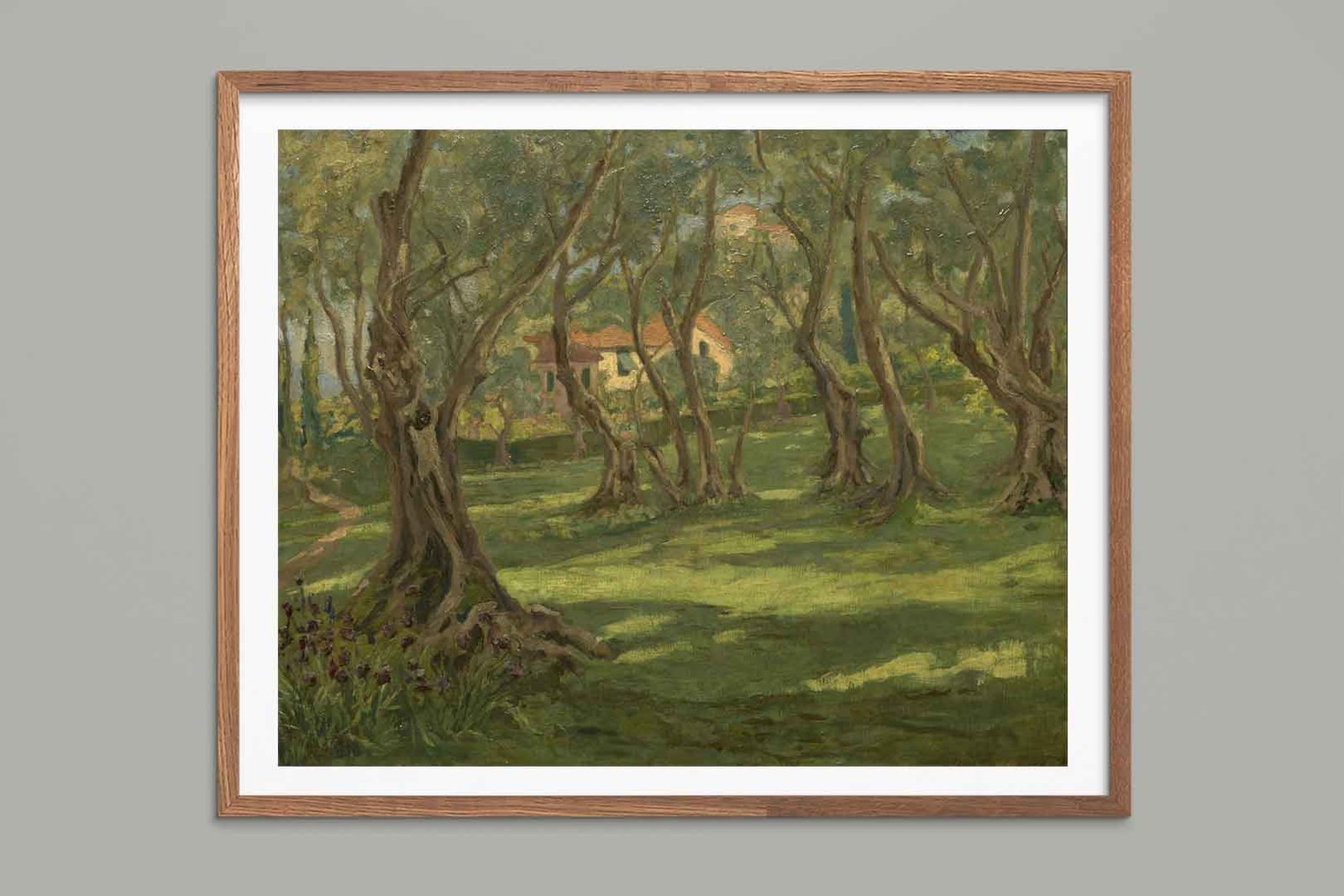
A painting by Winston Churchill, La Dragonnière, Cap Martin , now hangs in the Wallace Collection in London. A row of olive trees, a villa in the distance, the lights of the French Riviera. An innocuous landscape. But behind this canvas lies an obscure chapter in World War II, a hobby painting by a British prime minister that ends up in the hands of a Parisian art dealer who collaborated with the Nazis. The Wallace Collection’s current exhibition , Winston Churchill: The Painter, runs until November 29, and is the first time the painting is being discussed in public in light of its wartime story.
A gift and World War II
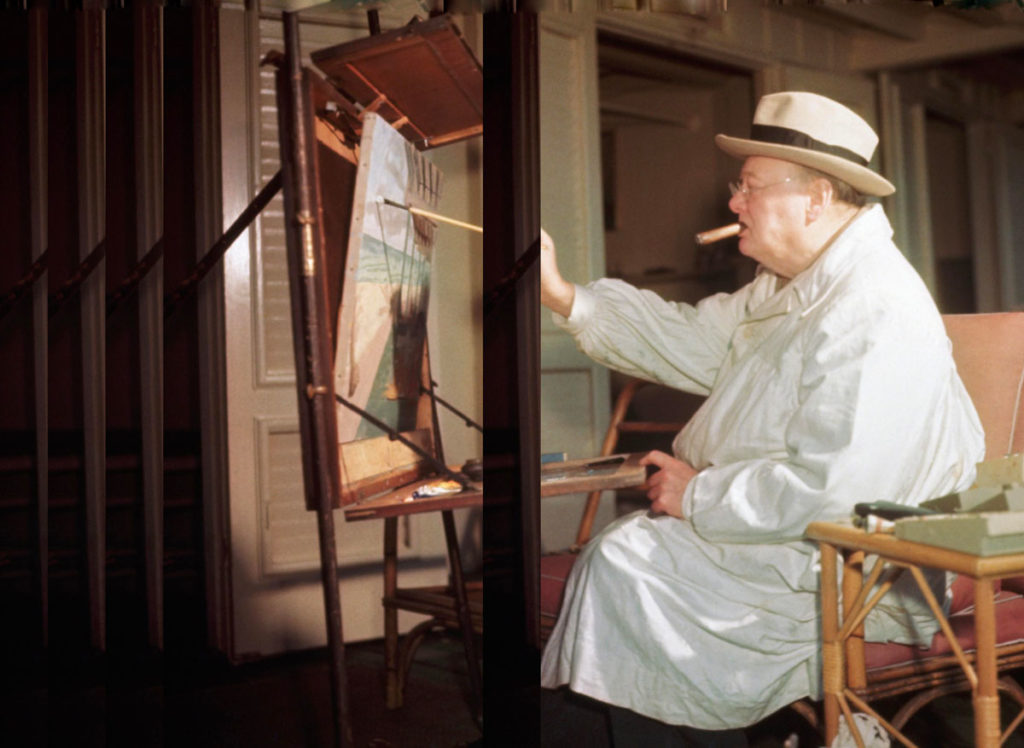
Churchill used to paint in his spare time to escape the pressures of politics. In 1937, he was a guest of the d'Estanville family in Cap Martin, near Monaco, at their villa La Dragonière. To commemorate the visit, he painted this scene of ancient olive trees, with the villa itself visible in the background. At the end of the visit, he presented the painting to the owner, Ron d'Estanville, as a gift. Ron was a representative of the Lanson Champagne company, and champagne was Churchill's favorite drink, so it is not surprising that the two developed a friendship. Interestingly, the villa had once belonged to Lord Rothermere, a friend of Churchill's and owner of the Daily Mail.
Pablo Picasso said, "Churchill could have become a professional painter if he had wanted to, if his time had not been occupied with other things."
There are several stories circulating within the d'Estanville family about the painting after the German occupation of France in 1940. Some say it was kept for safekeeping by a friend who later died, and how it ended up in the hands of a Parisian dealer. Others say it was sent across the border to Monaco and lost there. Another family account says the painting was simply "stolen." It is still unclear which story is true.
What is certain, however, is that the painting eventually found its way to the Parisian dealer Martin Fabiani. Fabiani was accused of collaborating with the Nazis and had connections to the Einsatzstab Reichsleiter Rosenberg, a group that looted works of art from Jewish owners in France during the German occupation. Fabiani's name has become a red flag for researchers looking for Nazi-looted art, even though many of the paintings he acquired were purchased legally. It is noteworthy that the d'Estanville family were not themselves Jewish. Fabiani was also implicated in a wartime plot to sell some fifty-four paintings confiscated from Jewish collections, which was later foiled by direct intervention from Berlin, the researchers wrote in a documentary discussion . Fabiani also regularly visited the casino in Monaco, which may explain how his connection to the film came about.
Fabiani demands praise for Picasso
In January 1945, five months after the liberation of Paris, Fabiani's gallery held an exhibition to raise funds for the Stage Door Canteen, an organization set up to entertain American soldiers. Pablo Picasso saw the painting at the exhibition, where his own work was also on display, and commented that "Churchill could have become a professional painter if he had wanted to, if his time had not been taken up by other things". Churchill was leading Britain's war effort as Prime Minister at the time. On the occasion of the same exhibition, Fabiani made the startling claim that during the war a high-ranking German official had wanted to buy the painting, even offering to exchange it for a portrait of Hitler. Fabiani said he had turned it down out of patriotism. There is no independent way to verify the veracity of this claim.
Shortly after the war, Fabiani was arrested on charges of selling art to the German occupiers. The French authorities confiscated his collection of paintings, including the Churchill painting. Two anonymous claimants then came forward, claiming that they, not Fabiani, were the true owners. Eventually, through a shady process, the painting was purchased by Australian collector Edward Waterfield Hayward, whose wealth came from a Coca-Cola franchise in Adelaide.
In 1961, Hayward auctioned the painting at Sotheby's in London. It was almost by chance that Anne-Marie Oppenheimer, the sociologist and daughter of Ron d'Estanville, recognized the painting there. At the time, it was difficult to claim artwork lost in war, so she bought it back for her family at auction for just £500. After her divorce in 1966, Anne-Marie sold the painting again, again at Sotheby's, this time for £2,000. The painting last changed hands in 2018, again at Sotheby's, this time for £358,000, which shows how much interest there has become in Churchill paintings. The painting is currently held by an international private collector, who also owns several other important works by Churchill.
Javier Brey, director of the Wallace Collection and curator of the exhibition, believes that this painting is the best work in the current exhibition. In his words, the combination of multiple stories surrounding the painting after it passed from the hands of the d'Estanville family and Fabiani's notoriety raises the question of exactly how it came to be in his hands . One thing is clear, since the family bought the painting back in 1961, there is no possibility of its restoration. Nevertheless, the curiosity of researchers has not stopped. According to Emily Esser, an American art historian who assisted in the research on the painting, the painting somehow reached the hands of the corrupt Nazi broker Fabiani, taking advantage of the chaos and unrest during the war. Exactly by which route, it is still unknown. A small landscape, olive trees and a villa scene, thus carries an obscure chapter of a century of European history.