San Antonio de los Baños airport, July 12, 1997. A military plane landed on the outskirts of Havana. Inside was a wooden box, and inside it were bones. An incomplete skeleton, missing both arms. Cuban forensic experts claimed that the bones belonged to a man who had been shot dead in a Bolivian schoolhouse thirty years earlier. Standing on the runway was a seventy-year-old man, still the head of state of Cuba at the time. The scene was being broadcast live on television, and millions of Cubans were watching from their homes.
If we place this moment at the center of the story, then the question arises, what was Fidel Castro seeing as he stood on the runway? An old friend? A national symbol? Or a piece of his youth that had rotted underground but never died politically? The answer to this question is not easy. And the purpose of this article is not to provide an easy answer. Did Fidel Castro really “search” for Che Guevara for “thirty years,” or is history more complex and politically cautious than that?
One night in Mexico City
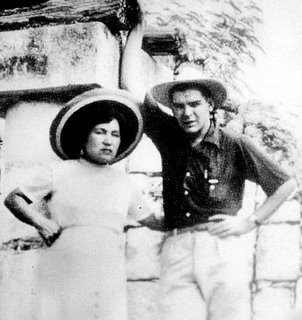
July 1955. Fidel Castro had just been released from prison. The Batista government had sentenced him to fifteen years in prison for the attack on the Moncada barracks, but public outcry forced him to release him after only two years in an amnesty. After his release, Fidel went to Mexico, where his brother Raúl was already living in exile. In a small apartment owned by María Antonia González, at 49 Emperán Street, Raúl introduced Fidel to a young Argentine doctor, Ernesto Guevara. There is some disagreement among historians about the exact date of this meeting. Some say mid-July, others July 19, but there is no dispute about the month or year.
Che himself later wrote that the night was spent talking politics until dawn, and within hours he had become a member of the future expedition. According to John Lee Anderson's biography, after the conversation that night, Che went to dinner with Fidel and Raúl, and a few hours later, at Fidel's invitation, he joined the revolutionary forces.
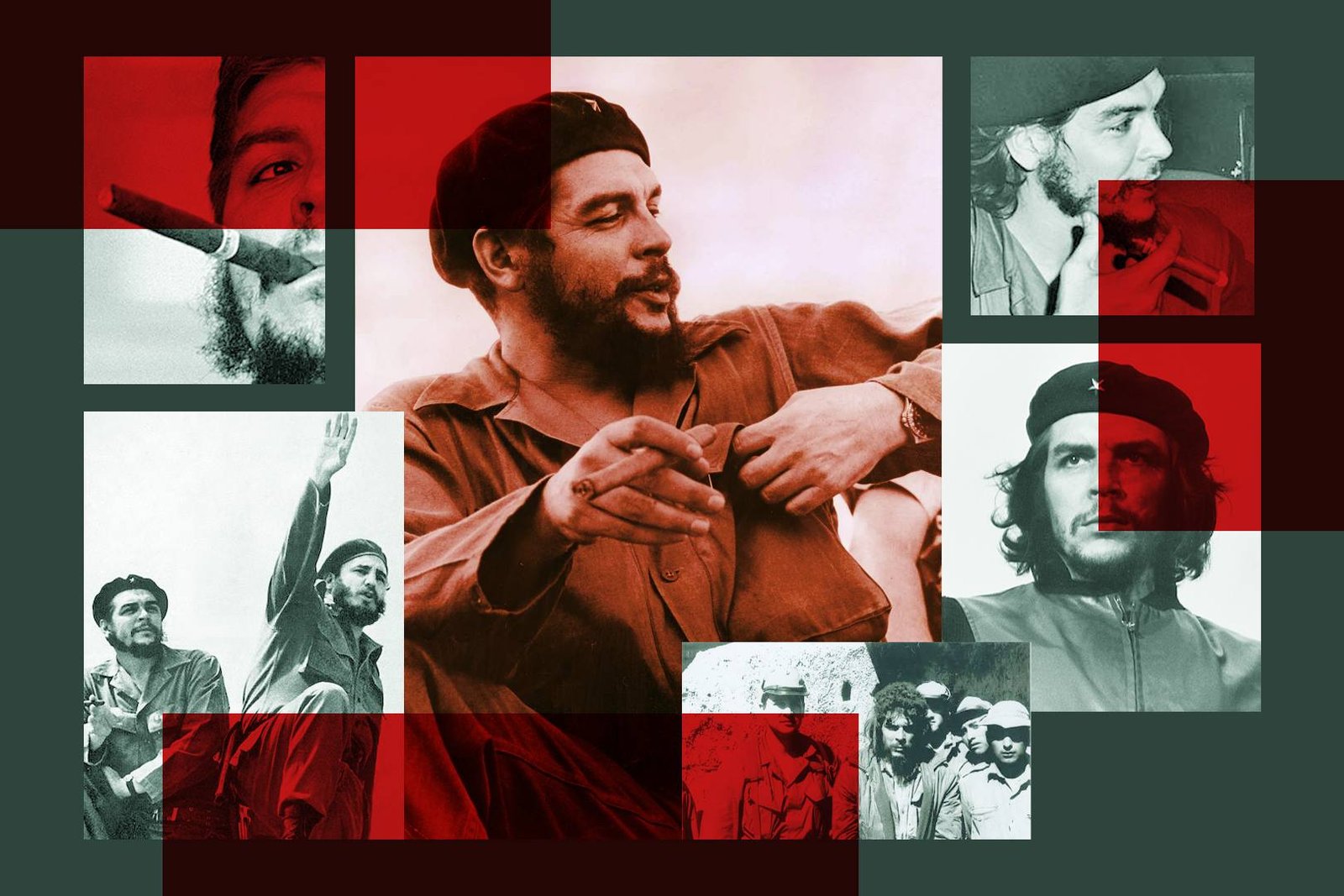
It would be a mistake to see this moment as pure romance. Che had already witnessed the fall of Jacobo Arbenz's socialist government in Guatemala, and the bitterness of the CIA-backed coup was ingrained in him. Fidel's ideological determination and personal courage fascinated him. But this fascination was as much political as it was personal. According to Che himself, Fidel seemed to him an extraordinary man who had the conviction to conquer the impossible. In November 1956, seventy-two revolutionaries set sail from Mexico on a small ship called the "Granma" for the coast of Cuba. Che was one of them. Soon after landing, the group was almost completely dispersed by an ambush by Batista's army. The few survivors took refuge in the mountains of the Sierra Maestra, and from there began a two-year guerrilla war.
During this time, Che was not just a fighter. His role gradually expanded, from doctor to military commander. In late 1958, Che led an independent column towards Las Vías and captured an armored train of Batista's forces in the city of Santa Clara. On January 1, 1959, Batista fled Cuba. In a speech given after entering Havana, Fidel himself said that Che had almost no military experience at the beginning of the war. In Mexico, Che's job was to dissect rabbits in a laboratory. However, it was through the war that Che became a military leader whose leadership was unquestioned.
After the revolution, Che successively held the positions of president of the National Bank and then minister of industry. He wanted to move the Cuban economy towards a socialist structure that was more centralized, morally motivated, and based on moral incentives than the Soviet model. The idealistic project of building a "new man" instead of market-based incentives. This position caused controversy within Cuba, especially with pro-Soviet economists. At the same time, Che was increasingly leaning towards internationalist politics. He believed that a revolution could not survive in isolation, especially a revolution in a small island nation in the vicinity of the United States. This belief sowed the seeds of his journey to the Congo and later Bolivia. His relationship with Fidel had not yet developed an open rift, but the rifts in their thinking on economic policy and international strategy were beginning to become clear.
Goodbye, dear.
After returning from a trip to Africa in February 1965, Che suddenly disappeared from public view. Without any official notice. Rumors spread inside and outside Cuba: Was Che ill? Had he fallen out with Fidel?
On April 1, 1965, Che wrote a letter to Fidel, although there was no date on the letter. It simply said “Havana, the year of agriculture.” Six months later, on October 3, 1965, Fidel read the letter publicly, in front of the cameras, before the Central Committee of the Communist Party of Cuba. At the same event where the name of the new Central Committee of the party was announced. Che was still alive and had not yet been to the Congo or reached Bolivia.
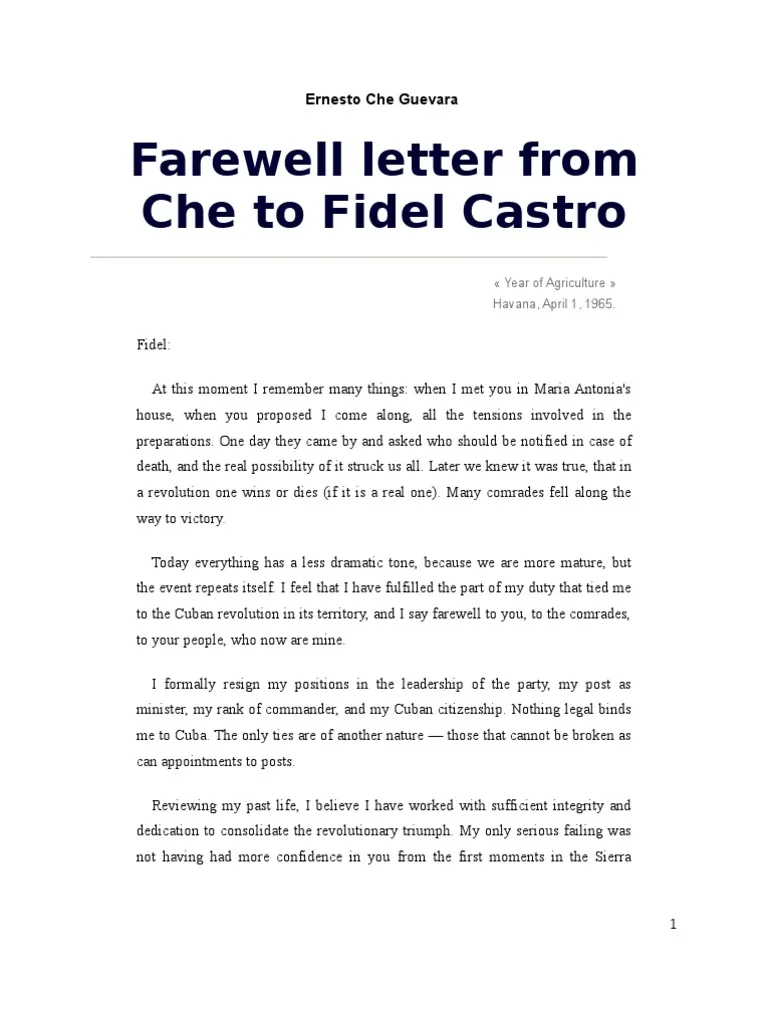
The language of the letter was that of formal surrender. Che wrote that he was formally resigning from the leadership of the party, from his ministerial position, from his rank of major, and even from his Cuban citizenship. Except for a bond that cannot be bound by law. He admitted that his greatest shortcoming was his inability to believe in Fidel's leadership qualities quickly enough at the beginning.
It would be a mistake to read this letter as a mere emotional farewell. It is also a political document. It answers rumors, establishes not Che's "purification" but his voluntary departure, and publicly legitimizes Fidel's leadership. Contemporary accounts indicate that Fidel was visibly emotional that night.
After the publication of the letter, Che first went to the Congo, where his campaign failed. Then, in disguise, under the false identity of a Uruguayan economist, he entered Bolivia in November 1966. The aim was to create a guerrilla base from which to spread the revolution throughout Latin America.
But reality in Bolivia proved to be far more cruel than his plans. The local peasants, on whose support the guerrilla war depended, did not join Che's forces; many even helped the army with information. The Bolivian Communist Party, especially its leader Mario Monche, withdrew from the promised cooperation. Meanwhile, the US CIA helped the Bolivian army create a specially trained Ranger battalion, led by Cuban-American CIA officer Felix Rodriguez. Months later, Che's group was decimated by hunger, disease, and constant military pressure. In the first week of October 1967, the Bolivian army surrounded the group in the Quebrada del Yuro.
On October 8, after a skirmish in the Euro Canyon, Che surrendered to Bolivian troops under Commander Gary Prado Salmon, wounded. He was captured and taken to a small schoolhouse in the nearby village of La Higuera. He was interrogated overnight, although he is reported to have yielded no useful information. Prado initially planned to have Che tried by a military court. But Bolivian President René Barrientos gave the order directly. No trial, no execution. The reasoning behind this decision was clear. A living Che could have become a political prisoner, attracting international attention and solidarity. It would have been much easier to portray a dead Che as "killed in battle."
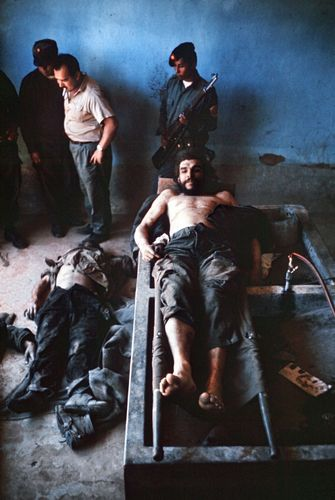
The next morning, October 9. Between 11:00 am and 1:00 pm local time (there is a slight difference in sources regarding this time) Sergeant Mario Teran entered the schoolhouse. He was ordered to shoot Che in the throat, so that it would appear that he had died in battle. The exact number of shots fired at Che is not known. Some say six, some say seven, and some say nine. However, what is known for sure is that the shots hit him in the chest, arms, and legs. Che was forty-nine at the time.
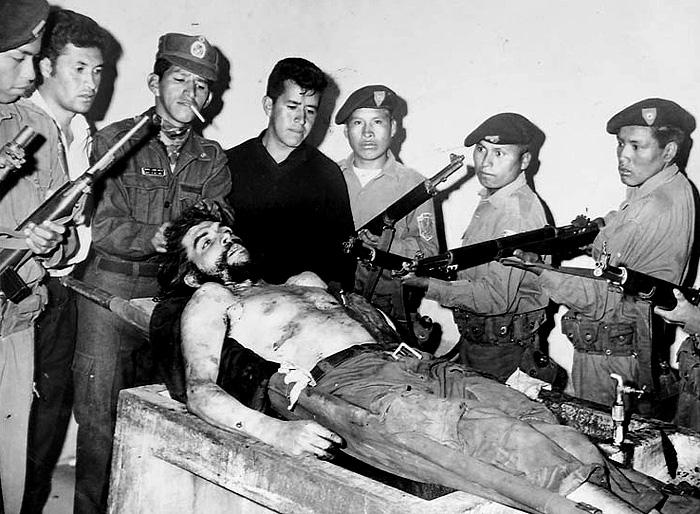
After his death, his body was taken by helicopter to Viagrande and then put on public display in the laundry room of the Nuestra Señora de Malta Hospital there, for journalists and local residents. These images later made Che a kind of crucified martyr's icon throughout the world. His hands were cut off to confirm his identity through fingerprints and sent to be matched with Argentine documents.
After Che's death
The next day, on the night of October 10, the Bolivian army closed the hospital exhibit and decided to “disappear” the bodies. The rationale for this decision was political calculation. The area around Che’s grave could have become a place of pilgrimage, a place of homage, or a symbol of resistance. The lack of a grave blocked that possibility, at least in the short term. So, the bodies of Che and six of his comrades were buried in a bulldozed pit at the edge of the runway of the Viagrande airport (although the claim of burial in this “same pit” was later disputed, as I will discuss later). Lieutenant Colonel Andrés Celich was involved in this work. For almost thirty years, the location of this site remained a secret from the government.
It can be said that this lack of a grave ironically turns Che into a permanent symbol in a sense. There is no body, so there is no tomb where history can stop. In the remote Bolivian village of La Higuera, the locals began to call Che “San Ernesto de la Higuera,” who had miraculous powers. When news of Che’s death reached Havana, Fidel first made a brief public statement, and on October 18, 1967, just nine days after his death, he gave a long memorial speech in the Plaza de la Revolución. The full text of this speech is still preserved and is the most reliable document we have of Fidel’s immediate reaction.
In that speech, Fidel described Che as an extraordinary martial artist. Who, from the Sierra Maestra to Santa Clara, had accomplished military feats that are rarely seen in history. He said that the enemy was mistaken if they thought that Che's death had defeated his ideas or strategies. At the end of the speech, Fidel's appeal to Cuban youth later became a daily pledge in Cuban schools: "Be like Che."
It is noteworthy that in this speech Fidel did not use the language of personal mourning. No tears, no personal recollections that go beyond the political framework. Rather, the entire speech is built on the language of history, ideology, and legacy. This is not accidental, Fidel was never one to publicly detail his personal emotions. His mourning was expressed in action. He declared an official year as the “Year of the Heroic Guerrilla,” lent his support to revolutionary movements throughout Latin America, and invoking Che’s name on every anniversary in the decades that followed.
The Cuban government had been diplomatically seeking the return of Che's remains to Bolivia for many years, but this effort was largely a quiet, low-level diplomatic effort. There was no sustained intelligence operation or public inquiry. According to a 1995 report , Cuban diplomats made this effort "quietly," but there was virtually no response from Bolivia. Given the sensitivity of Cuban-Bolivian relations, even raising the issue publicly was politically risky. Bolivia has seen many changes of power in the past 28 years. The transition from military dictatorship to democracy occurred in the 1980s. The question of Che's remains has remained politically sensitive under each government, as many of those who attended the burial were still alive and active in influential military circles. No major progress has been made in 28 years, as no Bolivian witnesses have come forward.
A rebel underground
In 1995, a democratic government under Gonzalo Sánchez de Losada came to power in Bolivia. That same year, New York Times journalist John Lee Anderson, who was writing a biography of Che, interviewed retired Bolivian General Mario Vargas Salinas. Vargas Salinas was an officer in the Bolivian 8th Army Division in 1967 and had led an ambush against guerrillas in Vado del Yeso. Vargas Salinas told Anderson that the bodies of Che and his comrades were buried in a mass grave under the runway of the Vayagrande airport. Why did he open his mouth after twenty-eight years? Asked why he had spoken out, he said that after all this time, there was no point in keeping the secret. Then, on November 21, 1995, the report, published in the New York Times, caused a worldwide sensation.
Importantly, this information was not provided by Vargas Salinas alone. Another retired general, Gary Prado Salmon, who had captured Che, confirmed that Che was buried in Viagrande with five comrades. President Sánchez de Losada immediately formed an investigative commission, and excavations began on December 1.
This article would be incomplete without mentioning a controversial point. Vargas Salinas himself claimed that Che was buried separately from his comrades. Some journalists claim that the same claim was later supported by the widow of Lieutenant Colonel Selic. However, in 1997, the Cuban team claimed to have discovered the mass grave, in which Che was found in the same pit with six comrades. A critical article on this discrepancy was published in The Independent Institute , which also highlighted some forensic inconsistencies. This skeptical statement stands in contrast to the mainstream historical consensus and is not widely accepted, but in the interests of honest journalism it was necessary to mention the existence of this controversy. However, back to the main event.
Even after the commission was formed, the search was not easy. Over the thirty years, the airport's topography had changed, the runway had been extended, and it took geologists, geophysicists, and archaeologists about two years to determine the exact location. The Cuban Forensic Institute, led by Dr. Jorge González, and the Argentine Forensic Anthropology Team (EAAF) joined the effort. On the morning of June 28 , 1997 , seven skeletons were found in a mass grave in the old part of the Viagrande airport. One of them was missing an arm. The skeleton was found with part of a torn olive-green jacket and a piece of a leather belt, which matched Che's clothing on the day of his death.
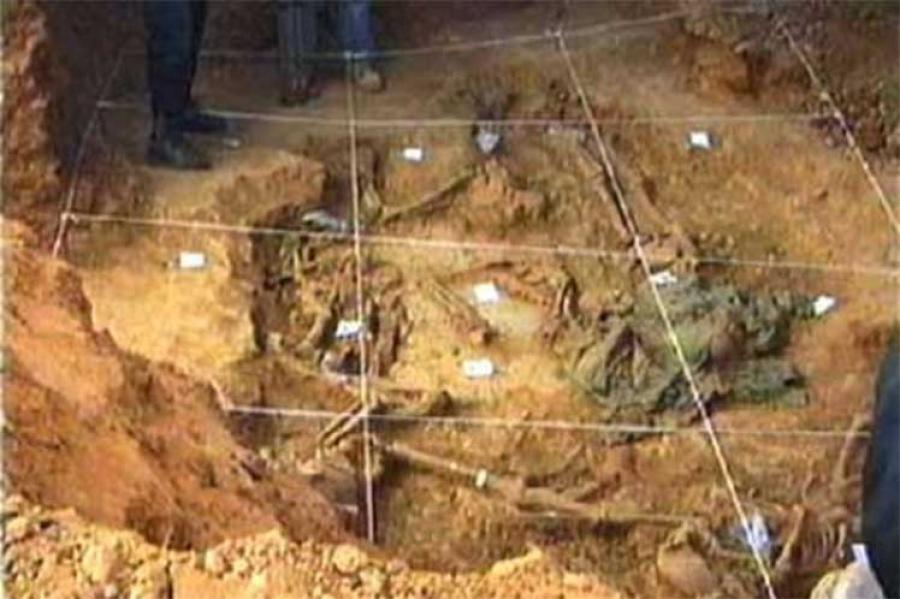
How did experts confirm that the skeleton was that of Che Guevara? The evidence was multi-layered, including the absence of hands (consistent with the documented history of fingerprinting), the structure of the skull, the absence of a tooth on the upper left side (which matched Che's dental records during his lifetime), bullet holes in the bones, and pieces of clothing found with him. Veteran former guerrilla fighters also provided information that helped in the identification.
This was followed by DNA testing. The DNA collected from the bones was compared with the DNA of Che's living children. A peer-reviewed paper was published on this subject, in which it was reported that the probability of paternity was determined to be more than ninety-nine percent through short tandem repeat (STR) and mitochondrial DNA analysis. This is truly scientific evidence. But considering the controversy mentioned in the previous section, some researchers who expressed doubts about this identification are still not completely satisfied, although the historical and forensic mainstream considers this identification acceptable.
Come back, revolutionary.
July 12, 1997. The plane carrying Che's remains landed at the San Antonio de los Baños military airport near Havana. Fidel personally presided over the televised ceremony. The remains were then taken to Santa Clara, where the public was given the opportunity to pay their respects publicly throughout the night of October 14. The final funeral took place on October 17. Several hundred thousand people gathered that day. A chorus of schoolchildren sang the song "Asta Siempre" written by Carlos Puebla, and then Fidel spoke.
In that speech, Fidel said, they had come not to bid farewell to Che and his heroic comrades, but to welcome them. In another part, he said, only in the world that Che dreamed of, the world for which he lived and fought, would there be enough room for him. He questioned why his killers thought that killing him would eliminate him as a warrior, when today he is everywhere, wherever a just cause is needed.
This speech, like the 1967 speech, is constructed in political language, not in the language of personal grief. There is no dramatic change in Fidel's vocabulary over the thirty years. The same symbolic firmness, the same state-controlled emotion. And this points us to an important truth. Fidel Castro never spoke of Che in personal language in his entire public life. Every time he tied Che to the language of the state, the language of history.
It was in the city of Santa Clara that Che defeated Batista's armored forces with just three hundred fighters in the final days of 1958. A military feat that finalized the victory of the revolution. Burying Che here meant returning him to the site of his greatest military victory. A symbolic circle was completed. The Ernesto Guevara Memorial Complex now houses a twenty-two-foot-tall bronze statue, a museum displaying everything from Che's childhood inhaler to the books he read, and an eternal flame that Fidel himself lit. Between 1997 and 2000, twenty-three more remains were found in Bolivia and later transferred to the memorial. The location of a revolutionary without a grave was thus transformed into a national pilgrimage site. The outcome that the Bolivian military had sought to prevent happened thirty years later, on a grander scale.
What actually happened back in Cuba?
A question can be asked. What actually happened in Cuba in 1997? To understand the answer, we need to dig a little deeper. In November 2016, Fidel Castro died at the age of ninety. After his death, the speech that was repeatedly broadcast on Cuban state television was the old call from 1967 to “Be like Che.” Now let’s get back to the question. What actually happened in Cuba in 1997?
It was literally an incomplete skeleton. Armless, decayed from thirty years underground. Scientifically, it was the result of a forensic identification. Politically, it was a tool for a state to rebuild itself. At a time when Cuba's economy was in shambles after the collapse of the Soviet Union, and a new source of revolutionary legitimacy was needed. Culturally, it was the return of a global icon, whose image had by then spread across T-shirts, posters, and dormitory walls. A symbol that had gone far, far beyond Cuban control.
Of the two men who had known each other that night in Mexico, one chose to stay, the other chose to go. One died on foreign soil, on the fringes of history. The other lived on for more than four decades, ruling his own country, and weaving the name of his dead friend into every official memorial in that country. What returned was not a single thing. It was a complex mixture of bones, politics, and legend. ●
This article does not directly endorse any claims , but rather examines each step with primary and reliable secondary sources. Where sources conflict (e.g., regarding the number of graves, the number of bullets, the finality of identification), the debate is highlighted, without reaching a single conclusion.