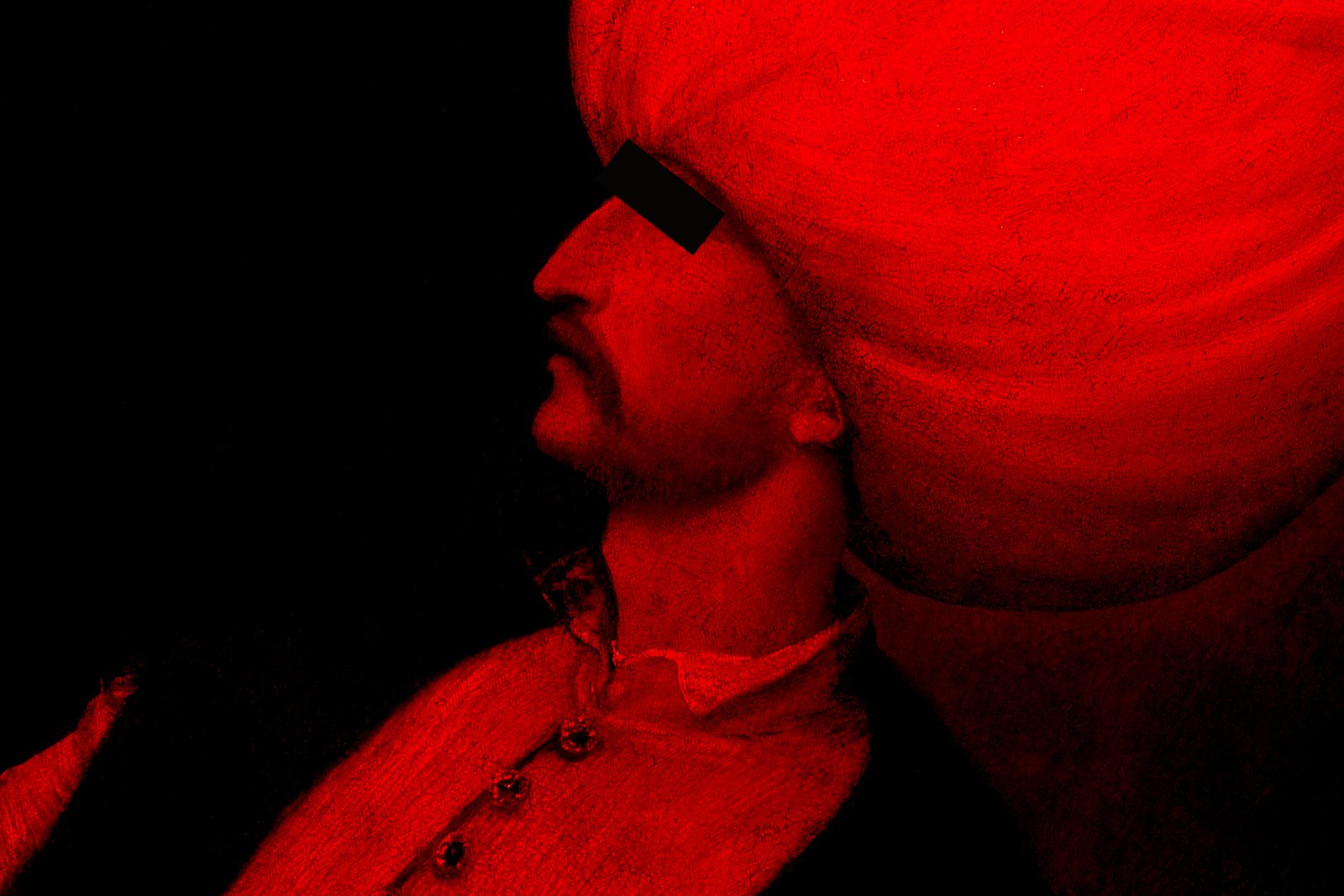
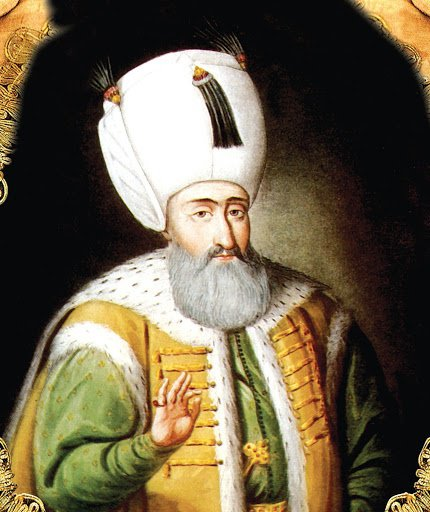
When nearly a hundred thousand Ottoman soldiers gathered in front of a small fortress called Szigetvár in southern Hungary in late August, there were only a few thousand Croatian and Hungarian soldiers inside the fortress. The fight was unequal in numbers, almost comically unequal. Yet it took the Ottoman army a whole month to capture this small fortress, and within that month, just before the fortress fell, Sultan Suleiman, the longest-reigning ruler of the empire, died in his tent. He was seventy-one years old at the time, and his body was in pain from rheumatism, yet he did not give up on leading this last campaign himself.
Historians still do not fully agree on the date of Sultan Suleiman's death. The Encyclopedia Britannica states that he died on September 5 or 6, 1566, near Szigetvár, of natural causes. However, a recent report in the Turkish newspaper Daily Sabah says that he died on September 7, just one day before the fall of the fortress. Another older report in the same newspaper also mentions the night of September 7. This confusion about the date is not accidental, it tells a story in itself. Because the news of the Sultan's death was not communicated to anyone at the time, not even to his own army, and it is natural for historical records to remain confused about the exact time of an event that is kept secret.
The war did not stop even after the Sultan died. The Grand Vizier Sokullu Mehmed Pasha immediately ordered the killing of all those who witnessed the death, and it was spread that the Sultan was only ill, recovering in a tent. The army was told to continue the conquest of the fortress by preserving the Sultan's body, and one fake decree after another was issued in his name, and even the ritual of obtaining fictitious approval by placing state documents in front of the corpse every evening was performed. This drama lasted for about forty-eight days, until the heir, Prince Selim, arrived in Belgrade and prepared to officially ascend the throne. This simple truth that a man is dead, but an empire cannot stand still, became a metaphor for Suleiman's entire life. For he himself was the representative of an institution that was bigger than the individual, whose continuity was the greatest political responsibility.
The birth of the prince and the preparation of the empire
Suleiman's birth date is also uncertain. The Britannica's short biography places him between November 1494 and April 1495. The World History Encyclopedia also expresses the same uncertainty, but there is no dispute that he was born in the city of Trabzon, because his father Selim was the provincial governor there at the time. He spent his childhood in this multinational, multi-religious city on the shores of the Black Sea, in an environment where, along with prosperity, infectious diseases and food shortages were a daily occurrence.
Succession in the Ottoman Empire was never automatic. Who would succeed to the throne after the death of his father was often decided on the battlefield, through a series of battles between brothers. As Selim's only son, Suleiman was not affected by the traditional bloody rivalry. He ascended the throne in September 1520, at the age of twenty-five, after the death of his father Selim, at a time when he had already gained administrative experience as provincial governor of Kaffa in Crimea and Manisa in western Anatolia. With his proficiency in Arabic, Persian, and Turkish, his education in mathematics and astronomy, and his rigorous military training, the young Suleiman was a ready ruler even before he ascended the throne.
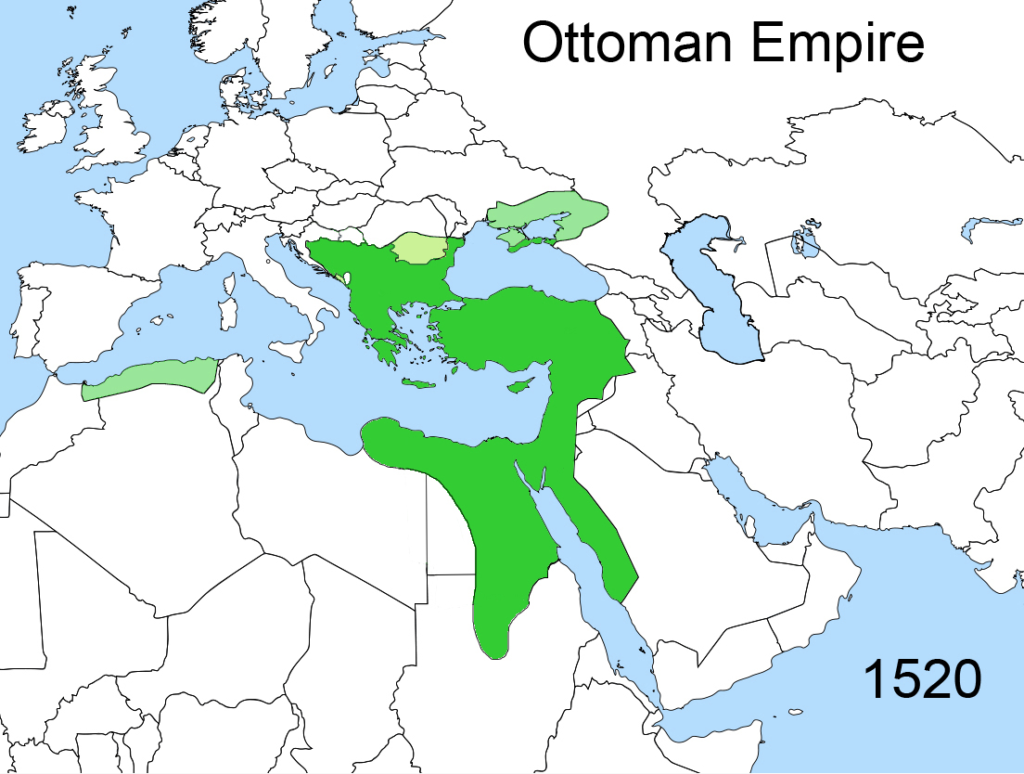
But the empire he inherited was not of his own making. His father, Selim I, had changed history in just eight years. In 1514, Selim defeated the Safavid Persians at the Battle of Chaldiran, halting their expansion into Anatolia, then turned south and conquered the Mamluk Sultanates of Egypt and Syria between 1516 and 1517. This single campaign nearly doubled the size of the empire, and added huge revenues to the treasury of Istanbul. In other words, when Suleiman ascended the throne, he had a financially prosperous, geographically extensive, and militarily confident empire. The question was, what new things would he build on this foundation?
Belgrade to Vienna
In the years following his accession to the throne, Suleiman embarked on a series of campaigns, each with its own strategic rationale. In 1521, he captured Belgrade, a fortress that had been the gateway to Central Europe for centuries. The following year, between 1522 and 1523, he captured the island of Rhodes, a stronghold of the Knights of St. John and a long-standing thorn in the Ottoman Mediterranean . The combined conquests of Belgrade and Rhodes gave Suleiman a secure gateway to Europe by land and sea.
In 1526, the Battle of Mohács took place, in which the forces of King Louis II of Hungary were crushed, and the king himself was killed on the battlefield. This battle completely shattered the political structure of Hungary, starting a long succession crisis between Habsburg Austria, the Ottoman Empire, and the Hungarian-Croatian royal families, which resulted in large parts of Hungary coming under Ottoman control . In the years following Mohács, the dispute over the Hungarian throne between the Habsburg Ferdinand I and the Ottoman-backed János Zápolya intensified, and from that dispute arose Suleiman's most ambitious campaign, the Siege of Vienna in 1529.
The campaign was massive in numbers, with over 100,000 men advancing on the Habsburg capital. But the weather was not on his side. The spring and summer of that year had been unusually rainy, causing heavy artillery to get bogged down in mud, many soldiers to fall ill, and when Suleiman reached the city walls in September, his forces were considerably weakened . At the end of October, cold and short of supplies forced Suleiman to retreat. This failure was not a single defeat, but rather marked a line of Ottoman expansion into Central Europe that remained largely unchanged for the next 150 years .
While this tension was ongoing in Europe, to the east Suleiman was embroiled in a long-running conflict with Shia Safavid Persia. This conflict was not just a border dispute, but also a struggle for Sunni-Shia political legitimacy. As a result of this conflict, Baghdad and Iraq came under Ottoman control, and in the Mediterranean, the Ottoman fleet under Barbarossa Hayreddin Pasha captured the major ports of North Africa one after another, establishing Ottoman rule for a time in the entire Mediterranean. By the end of Suleiman's reign, the empire's influence stretched from Hungary to Yemen, and from Algeria to Iraq, spanning Europe, Asia, and Africa.
Two names, two interpretations
Europe called him "The Magnificent", a title that reflected his military victories, royal splendor, and influence over European courts. But in the Ottoman world, he was better known by another name, Kanuni, meaning the Lawgiver. According to some historians, this title was first used by the Romanian historian Dimitrie Cantemir, and among Turkish speakers, this name became more common than Suleiman's own name.
The difference between these two names is not just linguistic. To Europe, “Magnificent” means splendor, victory, and fear. To Ottoman subjects, “Kanuni” means order, justice, and administrative stability. A statue of Suleiman, one of the twenty-three great legislators of history, is installed in the US Capitol building, which is an example of the international recognition of this second identity. The tension between these two identities is perhaps what sets Suleiman apart from other conquerors in history. He not only conquered, but also created a system or framework for holding the conquered territory.
Law, state and empire structure
When Suleiman ascended the throne, his empire stretched across Anatolia, the Balkans, Egypt, and the Levant, and each newly conquered territory brought with it its own fiscal system, land tenure systems, and legal traditions. The basis of Ottoman rule was Islamic sharia, but the sharia did not always provide direct guidance on the day-to-day realities of rule, such as taxation, land distribution, or the details of criminal punishment. This gap was filled by the “kanun,” the sultan’s own codified laws, which had been practiced since the time of Suleiman’s predecessors .
Suleiman's contribution was to bring these scattered laws into a coherent framework. He, together with his chief judicial officer, Sheikhul Islam Ebusud Efendi, created an effective balance between the canon and the Sharia, so that continuity of rule was maintained throughout the empire. Suleiman and his predecessor, Selim I, carried forward the tradition of codifying laws that had begun under Mehmed II with such political wisdom that their laws were the most frequently cited in later times. This legal reform was not an abstract theoretical project, but a framework born of practical administrative necessity, which helped to keep the empire's multilingual, multi-religious subjects under a common system of governance.
At the center of the cultural awakening that occurred during Suleiman's reign was the architect Mimar Sinan. Born into a Greek or Armenian Christian family, Sinan joined the Janissaries in the Debashirme tradition, converted to Islam, and after years of service as a military engineer, Suleiman appointed him as the empire's chief architect at the age of forty-seven. After this appointment, Sinan built hundreds of structures, from mosques to bridges, from baths to mausoleums, over the course of nearly three decades.
His most famous work is the Suleymaniye Mosque , which began construction in 1550 and was completed in 1557. Standing on the third hill of Istanbul, this mosque was conceived as a rival in grandeur to the Byzantine Hagia Sophia, although it was slightly smaller in size. The mosque was a state proclamation, where religion, architecture, and royal power came together to create a lasting monument to the empire's confidence. The Suleymaniye complex was also associated with social institutions such as madrasas, hospitals, kitchens, and baths, proving that this structure was not only a religious, but also an administrative and social center .
A broader cultural milieu developed around this architectural renaissance. According to an article in the Metropolitan Museum of Art, the advances in calligraphy, manuscript painting, textiles, and pottery during Suleiman's reign were so significant that the entire period was called the "Golden Age." An exhibition at the National Gallery of Art in Washington featured more than two hundred works of art from this period, including manuscripts of Suleiman's own poetry.
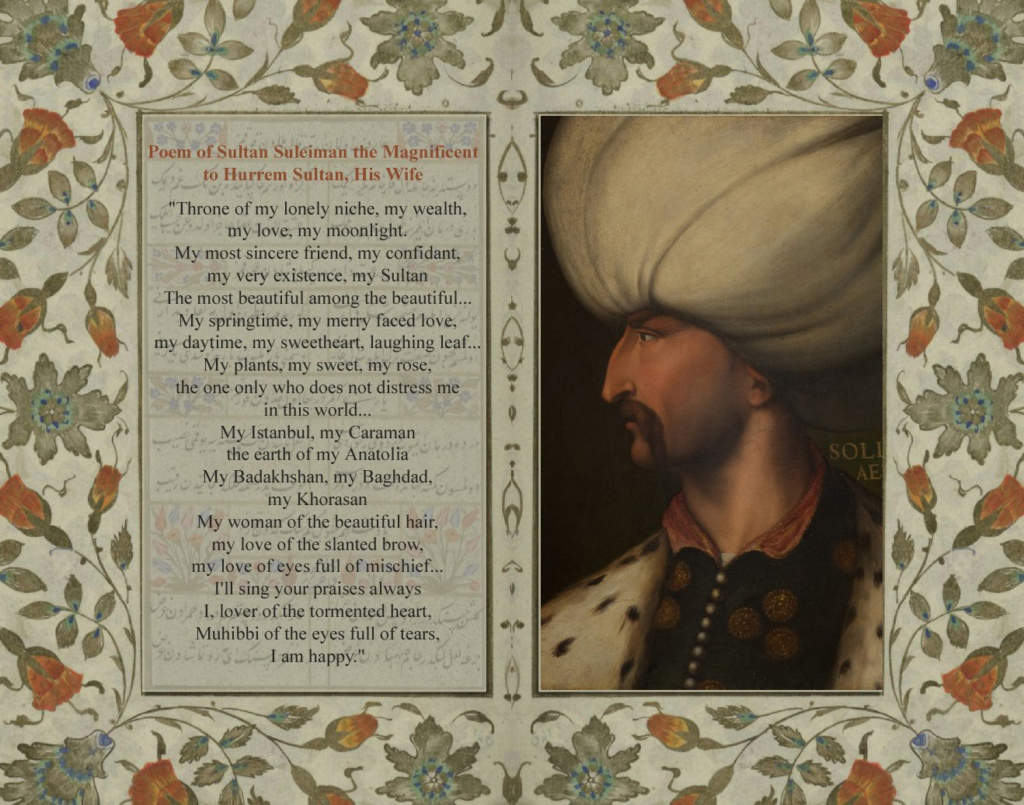
A sultan named Muhibbi
Suleiman himself was a poet. He wrote under the pseudonym Muhibbi, which means lover or lover of God. He took this pseudonym from the thoughts of the medieval Sufi saint Muhiuddin Ibn Arabi, where “muhibb” means friend of God . Researchers believe that thousands of poems were compiled in his Diwan, a manuscript of which is preserved in a museum in Berlin, containing more than six hundred poems spread over 213 folios, each decorated with golden flowers and vines.
Suleiman's habit of writing poetry was not merely a hobby. Divan poetry was a central part of the elite culture of the 16th-century Ottoman court, and when a sultan himself participated in it, it added an extra layer of legitimacy to the poets, to the court culture. According to researchers , Suleiman's poems served as both an expression of personal emotion and a tool of political propaganda, especially to highlight his ideological position against the Safavids. This duality of a ruler who returned from the battlefield and wrote poetry made his public image more complex, more human. The coexistence of these two identities, conqueror and poet, was not unusual for his time, it was the expected form of an ideal Ottoman ruler.
Hurrem Sultan and Palace Politics
The most talked-about chapter in Suleiman's personal life concerns his wife, Hürrem Sultan, known in Europe as Roxelana . Hürrem was a captive from what is now Ukraine, captured by the Crimean Tatars and brought to the Ottoman court as a slave. Her rise from slave to wife of the Sultan is presented in many popular accounts as a fairy tale love story, but historians understand the relationship in much more political terms.
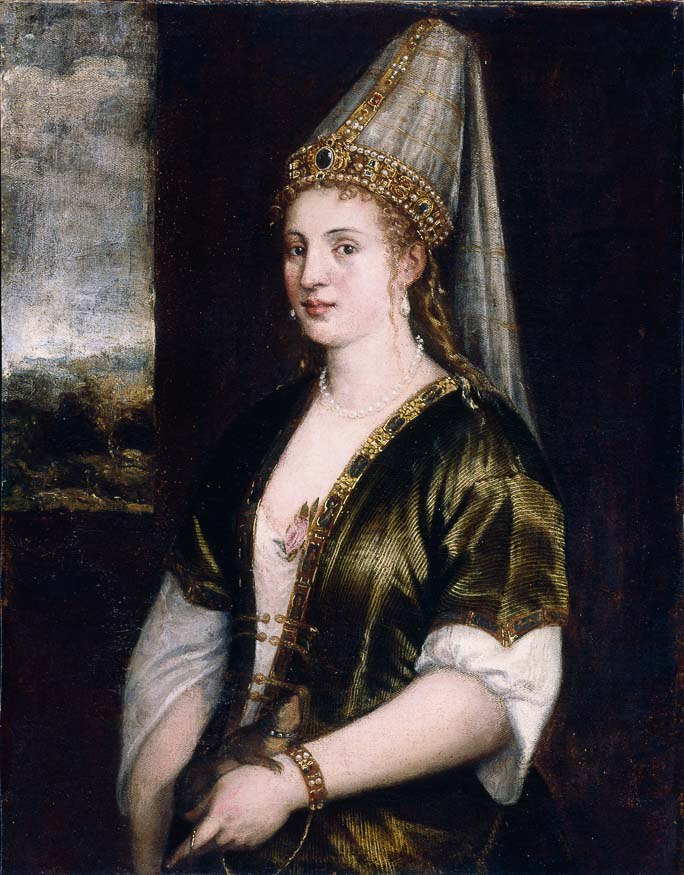
In 1534, Suleiman broke with Ottoman custom by marrying Hürrem, an unprecedented event in the dynasty's history, as Islamic law required the freeing of a slave before marrying her. This marriage allowed Hürrem and her children to remain in the capital, where traditionally the sultan's children were sent with their mothers to serve as provincial governors. This single change gave Hürrem a political position that no Ottoman woman had previously held, and historians mark this period as the beginning of the " Sultanate of Women ".
Hürrem was not confined to the inner court. She corresponded with foreign statesmen, sponsored public welfare institutions, and historians believe she influenced decisions such as the appointment of the Grand Vizier of the court. This influence is also the subject of various rumors and conspiracy theories in the accounts of contemporary foreign envoys, some of which were simply slander spread by rivals in palace politics. Seeing Hürrem and Suleiman's relationship as a love story misses its true significance; the proper context for understanding this relationship is the Ottoman succession politics, where the mother of each son was the center of a political camp.
Mustafa, Bayezid, and the Blood Price of Inheritance
The Ottoman succession system was brutally simple: the strongest son would inherit the throne after his father's death, and the remaining brothers would be killed in a practice that was approved by contemporary scholars to prevent civil war. Suleiman himself did not face this bloody rivalry, as he was an only son. But the same crisis engulfed his own family towards the end of his reign.
His first wife, Mahidevran's illegitimate son, Prince Mustafa, was at the height of his popularity, and the Janissaries almost openly supported him as the future sultan. In 1553, Suleiman executed his own eldest son, Prince Mustafa, during his campaign against the Safavid Empire in Nakhchivan. Mustafa was accused of plotting to rebel against the sultan and seize the throne. Due to political maneuvering and forged letters by the Grand Vizier, Rustem Pasha, and Suleiman's wife, Hurrem Sultan, Suleiman believed that Mustafa was plotting to overthrow him with the help of the Safavid Shah. Mustafa was then summoned to a military camp in Konya and strangled to death. This incident is one of the most tragic and controversial episodes in Ottoman history.
Another piece of information about this tragedy is found in the poetry of Taslizali Yahya Bey, one of the greatest poets of 16th-century Ottoman literature and a staunch follower of Prince Mustafa.
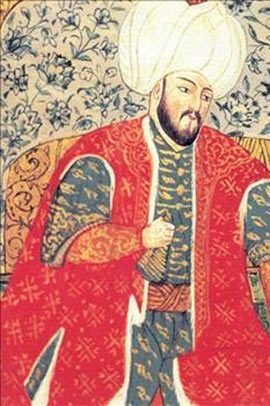
When Prince Mustafa was executed by order of Sultan Suleiman in 1553, Yahya Bey expressed his deep grief and anger by writing this poem called “ Şehzade Mustafa Mersiyesi ”. To better understand the political and literary significance of this poem, it is necessary to know some basic facts. It was a sign of extreme courage to directly accuse Grand Vizier Rustem Pasha and Hürrem Sultan, the most powerful men in the Ottoman Empire at that time, of conspiracy. In the poem, he called them “traitors” and “conspirators”. Yahya Bey himself was a Janissary soldier. His poem caused a great stir among the Janissary army and the general public, which shook the Ottoman court. Therefore, although the enraged Rustem Pasha wanted to punish him, Sultan Suleiman, out of generosity for his poetic talent and to avoid a possible rebellion by the Janissaries, spared him the death penalty. He was exiled from Istanbul to the Balkans (present-day North Macedonia).
However, historians still debate how much of this tragedy was due to the intrigues of Hurrem and her son-in-law Rustem Pasha, and how much to the actual political threat of Mustafa. Academic studies show that Ottoman, Venetian, Habsburg, French, and Persian sources offer different interpretations of the event, and modern historians see it as the result of a complex combination of political pressures rather than a single conspiracy.
After Mustafa's death, Hürrem's two sons, Selim and Bayezid, were the only remaining rivals. After Hürrem's death in 1558, the tension between the two brothers escalated into open conflict, Bayezid openly rebelled in 1559, and, defeated, fled to Safavid Persia . There, Shah Tahmasp initially sheltered him, but later, under pressure from Suleiman and in exchange for a large sum of money, returned Bayezid, and then in 1561, he and his sons were killed. There is always the temptation to dramatize these events as popular myths, but as far as the historical record confirms, it can be said that a father lost his two sons in the name of state stability. The conflict between personal affection and state policy behind this decision is a very structural feature of the Ottoman monarchy, where stability of the throne was considered more important than blood ties.
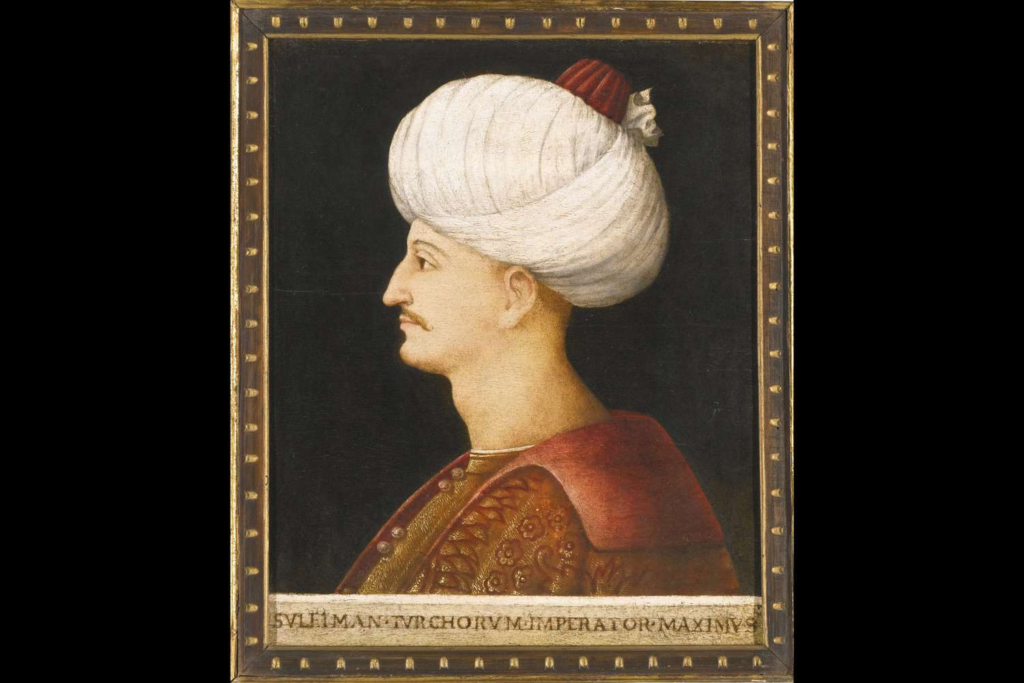
The last expedition of an old emperor
Suleiman's health began to deteriorate in the last decade of his life. He suffered from rheumatism, which made long journeys difficult, but in 1566, when border disputes with the Habsburg Emperor Maximilian II intensified, he decided to set out on his own for the last time. A desire to restore Ottoman prestige after the failed siege of Malta in 1565 also played a role in the campaign . Despite his physical weakness, he left Istanbul with a royal procession, riding a horse in white, so as not to show any signs of his illness to his subjects. If his illness worsened along the way, he was carried in a carriage, but at the center of each city he would remount to maintain his royal image.
The fortress of Szigetvár finally fell in the first week of September, with almost all the defenders killed, and the commander of the fortress, Nikola Zrinsky, also killed on the battlefield. But Suleiman himself was not alive at this moment of victory, he had already passed away in his tent. According to an article from the University of Pécs in Hungary, his remains were buried near the tent, and his son Selim II later had a türbe or mausoleum built on the site. His remains were later brought back to Istanbul, and buried in the Suleymaniye Mosque, designed by Sinan, which he himself had built. This forty-eight-day drama of keeping the news of his death secret reveals a profound truth about the Ottoman state. The continuity of the throne was so important in the monarchy that even a fundamental truth such as the death of an emperor could be temporarily denied if it ensured a safe transfer of power. Prince Selim finally reached Belgrade and ascended the throne.
Was Suleiman truly the architect of the Ottoman Empire’s “golden age,” or was he the brightest face of an empire whose foundations of power were already in place? There is no easy answer to this question. Building on the geographical and economic foundations left by his father, Selim, Suleiman built a legal framework, an architectural language, a cultural identity that would continue to define Ottoman identity for centuries to come. This long reign of forty-six years was not a monotonous triumphal saga; it encompassed military ambition and legal restraint, cultural patronage and family cruelty, poetic sensibility and political ruthlessness. Suleiman himself may never have resolved these contradictions. But history remembers him precisely for this duality, as a sultan who was at once magnificent and legal, conqueror and lawgiver, lover and murderer.